Eisenkot and Netanyahu tied at 51 seats as Arab blocs hit record 18
Exit polls show Palestinian citizens voting at 80 percent, forcing a mathematical puzzle for both major coalitions.
By Henry Castro ·
Exit polling data from Tuesday’s parliamentary vote indicates that the two leading political blocs in Israel are currently tied at 51 seats each. This stalemate leaves both sides short of the 61 seats required to form a stable government. The deadlock has been driven by a historic surge in turnout among Palestinian citizens of the country.
The Joint List and Ra’am, the two major Arab-led parties, are projected to win a combined 18 seats. This would be a record number for Arab representation in the 120-member Knesset. Channel 12 reported that voter participation among Palestinian citizens reached approximately 80 percent. This figure breaks the previous record set in 1999.
Mansour Abbas, the leader of the Ra’am party, stated that the current numbers make a governing majority difficult to achieve. "With the numbers we have now, there is no government," Abbas told Channel 12. He noted that his party, which holds five seats and previously served in the government from 2021 to 2022, was contacted by both the Eisenkot and Netanyahu blocs before and after the polls closed.
Alon Pinkas, a former Israeli ambassador, told Al Jazeera that the opposition bloc faces a strategic dilemma. Eisenkot’s Yashar party campaigned on a pledge not to form coalitions with Arab parties. Pinkas argued that this promise creates a financial and political cost for any government seeking to include them. "There’s a price to pay," Pinkas said, adding that Arab parties will likely make demands that Jewish-led coalitions might resist.
Prime Minister Benjamin Netanyahu’s Likud party engaged in a final push to mobilize supporters on Tuesday. Netanyahu warned of high Arab turnout, describing the situation as a threat to the composition of the next cabinet. He posted images of long lines at polling stations in Arab communities and referenced specific Knesset members. "If we don’t wake up now, we’ll find ourselves with a government of Mansour Abbas and Ahmad Tibi," he wrote on social media.
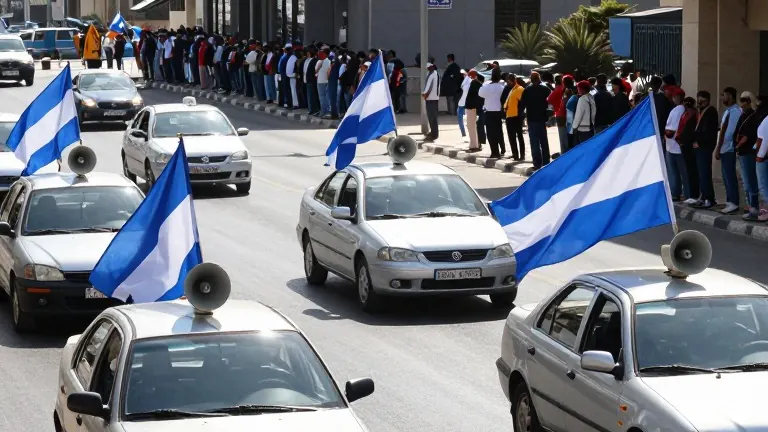
Witnesses in Jerusalem reported seeing cars flying Likud flags drive through the city while playing the Islamic call to prayer over loudspeakers. Arab politicians criticized this tactic as inflammatory. The strategy aimed to drive Jewish voters to the polls by emphasizing the growing influence of the Arab voting bloc.
The Central Elections Committee confirmed that overall voter turnout reached 77.7 percent, the highest level since 1999. Palestinian citizens make up roughly 21 percent of Israel’s 10 million residents. Historically, this demographic has voted at lower rates than their Jewish counterparts, but Tuesday’s numbers marked a sharp departure from that trend.
Nour Odeh, reporting from Ramallah in the occupied West Bank, described the election as an existential moment for Palestinian Israelis. She noted that the turnout included voters who had previously boycotted elections due to a belief that their votes would not alter systemic discrimination. The Knesset has passed more than 100 laws that Odeh said discriminate against this population, particularly regarding state funding.
Source: Al Jazeera
More Business · Scam Watch · Report a business · Got a Story?