Methane Rules: Trump administration proposes rolling back emissions standards
The EPA plans to weaken 2023 regulations on oil and gas drilling, a move industry leaders call workable but critics argue will cost more in lost product.
By Lucas Mehta ·
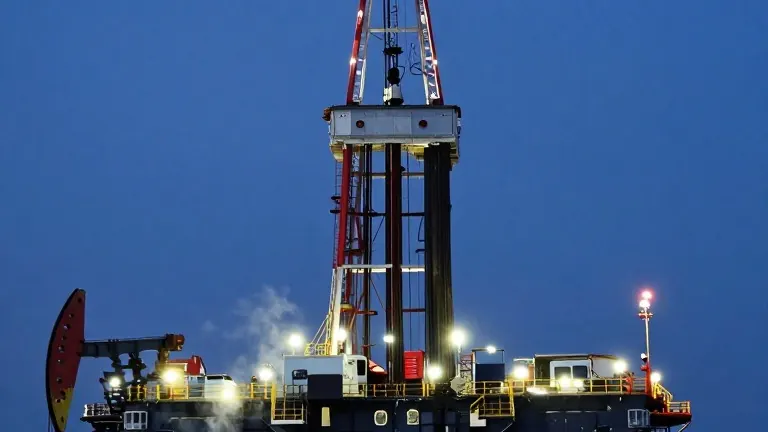
The Trump administration announced on Tuesday that it will propose changes to federal rules governing methane emissions from the oil and gas industry. The move targets regulations finalized by the Biden administration in 2023. President Trump made the announcement while campaigning in Lubbock, Texas. He stated that the revision, enacted under the Clean Air Act, would save the industry billions of dollars in production costs. He also said the changes would encourage more domestic drilling.
Methane is a potent greenhouse gas. Estimates indicate it is 80 times more effective at warming the planet than carbon dioxide over a twenty-year period. EPA Administrator Lee Zeldin defended the rollback in a press release. He claimed the previous rules destructively targeted workers and businesses. Zeldin noted that millions of jobs depend on every barrel of oil and cubic foot of natural gas produced in the U.S.
Industry leaders generally support the proposed changes. Dustin Meyer, vice president at the American Petroleum Institute, said the group looks forward to a more workable approach. The trade organization stated that the new rules would provide greater regulatory certainty. They also argued the changes would support American energy production while continuing to reduce emissions.
Environmental groups disagree with the administration’s cost analysis. Jon Goldstein, associate vice president at the Environmental Defense Fund, argued that capturing more gas reduces costs by creating more sellable product. He said that allowing gas to leak or flare wastes resources that should generate tax and royalty revenue for taxpayers. Goldstein described the current proposal as harmful to energy security.
One major change involves the Methane Super Emitter Program. This program was scheduled to begin in January 2027. It would have allowed the government to use data from certified third parties, including satellite programs, to detect large leaks. Paasha Mahdavi, a political science professor at UC Santa Barbara, explained that the government needs help to identify and prosecute facilities breaking the law. He said removing the program would make it harder to spot invisible leaks from pipelines and refineries.
The proposal also loosens rules for low-volume, marginal oil wells. These wells are considered marginally economic because they generate little profit. Goldstein noted that satellites and new technology show these old, end-of-life wells are responsible for a large share of methane pollution. He rejected the assumption that small production equals small emissions. The EPA plans to hold a public hearing and accept comments for at least 45 days once the rule changes appear in the Federal Register.
Source: KPBS
More Business · Scam Watch · Report a business · Got a Story?