Netanyahu Trial Pauses as Court Limits Former AG Questioning
A 2-1 ruling restricts how much former attorney-general Avichai Mandelblit can be asked about police conduct, prompting an immediate adjournment in the prime minister's corruption case.
By Elijah Davidson ·
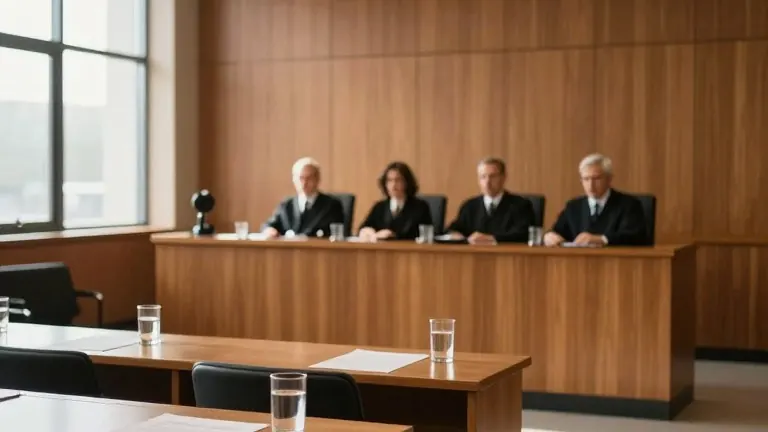
Two judges on the Jerusalem District Court panel voted to restrict the scope of testimony from former attorney-general Avichai Mandelblit in Prime Minister Benjamin Netanyahu’s ongoing corruption trial. The decision, reached by a 2-1 margin on Wednesday, confines questions to the specific approvals Mandelblit granted for investigations into the prime minister. The ruling was handed down just one day after the national election, effectively pausing a contentious line of questioning that defense lawyers had planned to pursue further.
The core of the dispute involved whether the defense could question Mandelblit about police and prosecution actions taken after he authorized the investigations but before he filed charges. Defense counsel Amit Hadad argued that material information was withheld from the former attorney-general, which he said undermined the validity of the decision to indict. Prosecutors objected, arguing that expanding the testimony to cover internal decision-making processes would exceed the purpose of his appearance. Judge Rivka Friedman-Feldman, the presiding judge, noted that Mandelblit had stated he did not personally review all materials, including certain transcripts.
Judge Moshe Bar-Am voiced a minority opinion during the deliberation. He challenged the logic of limiting the testimony after Mandelblit had already discussed unlawful investigative actions on the stand. "How can we ignore the fact that the attorney-general comes here and testifies about unlawful actions?" Bar-Am asked prosecutor Yehudit Tirosh. He warned that stopping the line of questioning could leave gaps in the factual record, given that the door to such topics had already been opened. Despite his concerns, he joined the majority in voting to keep the testimony narrow.
Mandelblit was called by the defense to clarify the level of authorization given to the police. Under Israeli Basic Law, the attorney-general must consent before a criminal investigation into a sitting prime minister can begin. In his testimony, Mandelblit acknowledged that some significant steps were taken without his direct approval. He explained that while he authorized the investigations, investigators were expected to consult him on major developments. He specifically mentioned ordering police to halt wiretapping of Natan Eshel, a Netanyahu confidant, once he learned of it. He also criticized a tactic used on Nir Hefetz, a former media adviser turned state witness, calling it improper because he had not been informed in advance.
On Monday, Mandelblit conceded that questioning in Case 1000 went beyond the initial warning given to Netanyahu. He further stated that the warning for Case 2000 did not align with the allegations actually under investigation. Despite these admissions of procedural irregularities, he defended his decision to indict. He rejected the claim that external pressure influenced his choice and disputed the defense argument that the bribery charge in Case 4000 had collapsed. He maintained that investigative errors do not automatically require the exclusion of evidence.
The timing of Mandelblit’s testimony coincided with the final weeks of the October 27 election campaign. The defense requested seven hearing dates between October 11 and October 22 to ensure his appearance concluded before the vote. The court rejected his request to delay testimony until November or December, citing his duties as dean of the law faculty at the Academic College of Ramat Gan. His testimony ran longer than planned, with the final session occurring on Wednesday, the day after the election.
The trial, which began in May 2020, covers three distinct cases. Case 1000 involves allegations regarding expensive gifts from businessmen Arnon Milchan and James Packer. Case 2000 concerns negotiations with Yediot Aharonot publisher Arnon Mozes about favorable coverage. Case 4000 alleges that Netanyahu advanced regulatory measures favoring Bezeq’s former controlling shareholder, Shaul Elovitch, in exchange for media intervention. Netanyahu faces fraud and breach-of-trust charges in all three cases, along with a bribery charge in Case 4000. He denies all wrongdoing.
The case remains in the defense stage. Netanyahu completed his own testimony in June after 98 hearings. The court is currently hearing other defense witnesses. To accelerate the process, hearings moved to a five-day weekly schedule this month. The defense case and closing arguments must still be completed before the court renders a verdict. Following Wednesday’s ruling, the defense requested a short adjournment to adjust their questions, and the prosecution did not object, ending the session after approximately two hours.
Source: The Jerusalem Post