
Manx shearwaters suffer ocean jet lag
A new study reveals that long-distance seabirds experience biological time shifts that disrupt their solar navigation systems.
By Henry Castro ·
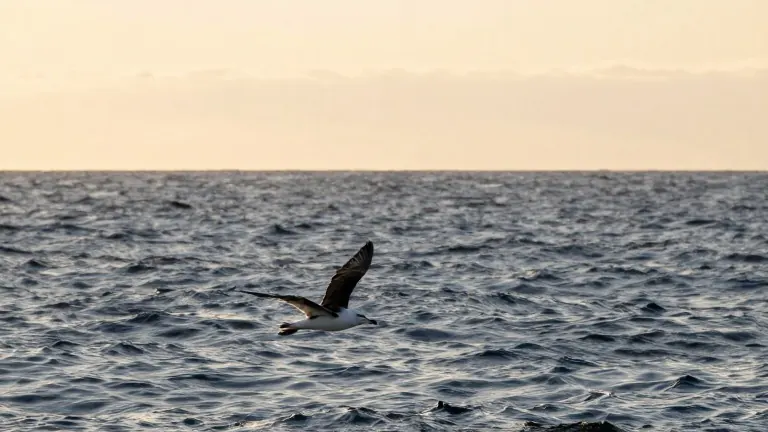
Avian migration across the Atlantic has long been a subject of biological interest, but the internal timing of these birds has only now been rigorously tested. A new study published in Science identifies a physiological disruption in Manx shearwaters that directly impacts their ability to find their way home.
Researchers found that these seabirds experience jet lag during their long flights. The study focused on Manx shearwaters, which are medium-sized birds roughly the size of a pigeon. They possess long wings and are closely related to albatrosses. Patrick Lewin, a behavioral and sensory ecologist at the University of Oxford and the lead author of the study, described their physical characteristics. He noted that they are white underneath and black on top.
These birds nest in burrows on coastal islands around the North Atlantic. Most breed around the UK and Ireland, with about half of the population living in Wales. From these colonies, they travel out to feed in the Atlantic. Their feeding grounds range from a few dozen kilometers away to more than 1,000 kilometers offshore. To return to their colonies, they rely on a combination of sensory inputs and celestial cues.
The research indicates that shearwaters use a map sense to determine their location, possibly based on smell. They then use the Sun as a compass to set their direction. This method requires a precise internal clock because the Sun moves across the sky throughout the day. Lewin explained the navigational challenge. He stated that a bird traveling south all day must adjust its heading relative to the Sun. At sunrise, it travels 90 degrees clockwise of the Sun. By midday, it travels straight towards the Sun. By sunset, it travels 90 degrees anticlockwise of the Sun.
The internal clock in Manx shearwaters is not perfectly synchronized with the new local time zones they enter. This desynchronization skews their solar compass. The study shows that the jet lag creates a measurable error in their navigation. The birds effectively misjudge the time of day in their new location. This timing error leads to directional mistakes during their return flights. The findings suggest that biological rhythms play a critical role in long-distance avian navigation.
Source: Ars Technica