64.2 Million Votes: Lula Claims Fourth Term in Brazilian Runoff
The president secured a 51.79 percent victory over Flávio Bolsonaro, prompting a legal challenge over extended voting hours.
By Elijah Davidson ·
Luiz Inácio Lula da Silva won a fourth term as Brazilian president on Sunday, securing 64.2 million votes against 59.8 million for his rival, Flávio Bolsonaro. The final tally gave the former union leader 51.79 percent of the vote, a margin of over four million ballots that reversed the outcome of the first round held on October 4. In that earlier contest, Flávio Bolsonaro led by two points, a gap that polls suggested was insurmountable given the right-wing victory in the concurrent legislative elections.
The turnaround marked a rare comeback in Brazil's democratic history. Opinion polls during the two-week campaign period consistently showed a statistical tie, never placing Lula ahead. The final result exceeded the margin by which Lula defeated Jair Bolsonaro in 2022. Lula framed the contest as a choice between democratic stability and the authoritarianism associated with the Bolsonaro family, noting that his political rival's father faces a 27-year prison sentence for plotting a coup.
During his victory speech, Lula thanked young voters for taking to the streets to defend democracy and older citizens for casting ballots, which helped lower the high abstention rates seen in the first round. He also positioned the election as a rejection of foreign influence, stating that Brazil does not accept being anyone's backyard and intends to remain a central player in global discussions.
Flávio Bolsonaro disputed the result, arguing that a judicial decision to extend voting hours by two hours nationwide violated the principle of equality. The extension was ordered by Supreme Court Justice Cristiano Zanin, a former lawyer for Lula, one minute after the standard closing time. This late change caused technical, operational, and security difficulties, according to Kassio Nunes Marques, president of the Superior Electoral Court. In several right-leaning cities, free bus services mandated by the court were insufficient, a factor the Workers' Party claimed disadvantaged poorer voters who typically support the left.
In a statement to the press in Brasília, Flávio Bolsonaro called the situation unacceptable and claimed the rules of the game were changed by Lula's allies in the Supreme Court. He announced plans to seek annulment of the election in the courts. Despite these objections, Hugo Motta, the speaker of the Chamber of Deputies, and Davi Alcolumbre, the president of the Senate, both allies of Lula, recognized the victory.
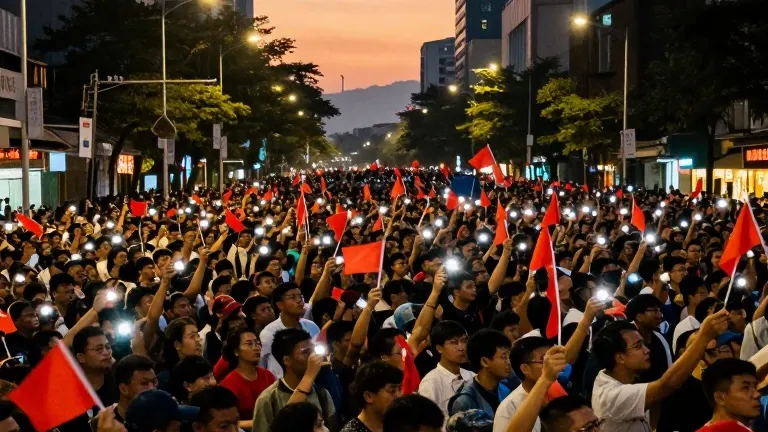
Celebrations erupted across the country, with the largest gathering in São Paulo, where tens of thousands of people filled Avenida Paulista to chant against dictatorship. Lula, who turns 81 soon, had to adapt his campaign strategy for the runoff by adopting a smartphone and engaging on social media for the first time. Starting Monday, he faces the task of governing with the most right-leaning Congress in Brazil's history.
Source: Latin Opinion