Trump Stumps in Deep South as Tariffs and Iran War Fuel Midterm Panic
Polls show Republicans vulnerable in traditional strongholds as the president campaigns in states like Mississippi and Texas ahead of November 3.
By Henry Castro ·
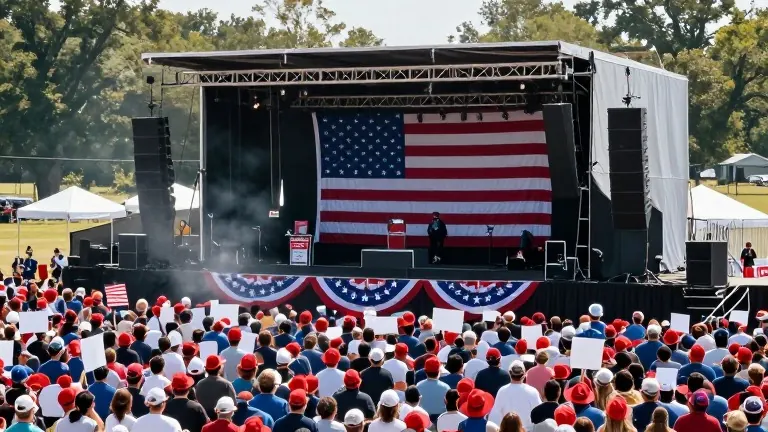
President Donald Trump is campaigning in Mississippi this week, a state that gave him nearly 61 percent of the vote in 2024. The visit signals a shift in the Republican strategy, moving away from competitive states like Michigan and Minnesota to defend Deep South strongholds. Trump told reporters in the Magnolia State that he was there to ensure Senator Cindy Hyde-Smith’s victory. “I’m here because Cindy’s doing great, but I just got to make sure. I can’t take a chance,” he said.
The need to personally drive out the vote suggests the political terrain has changed. Mississippi has not elected a Democratic senator since the 1990s, yet it has become a focal point of anxiety for the GOP. If the state is even moderately competitive, analysts argue, it indicates a larger problem for the party in power.
Two years into the second Trump term, economic frustrations are driving voter sentiment. The administration imposed a tariff scheme that the New York Federal Reserve confirmed drove inflation and prevented goods prices from falling. These price increases were compounded by a recent conflict with Iran, which followed a joint American and Israeli strike that killed Iran’s Supreme Leader. The war has pushed gas prices to a record high for this time of year.
Affordability remains the top issue for American voters, according to consistent polling. The cost of living has risen due to factors the administration did not initially anticipate. This economic strain undercuts a core campaign promise to avoid new “forever” wars. The current conflict in Iran is showing signs of stretching into a long engagement, further complicating the Republican message.
The war has also caused internal rifts within the MAGA movement. High-profile figures including Tucker Carlson, Megyn Kelly, and former Representative Marjorie Taylor Greene have broken from Trump over the conflict. These departures add to the pressure on the president, whose approval rating sits around 40 percent according to RealClearPolitics averages. Meanwhile, approximately 60 percent of Americans believe the country is heading in the wrong direction.
Polling data indicates Republicans are expected to lose the House. Several Senate seats currently held by Republicans are viewed as highly vulnerable. These include races in Georgia, Texas, Iowa, Maine, Alaska, Ohio, and Kansas. The Georgia Senate seat, once a possible flip target, now appears out of reach for Democrats, while other states show tight margins that favor the opposition.
Trump’s campaign has also been marked by a focus on renaming various entities and places. He has pushed to change the Department of Defense to the Department of War and the Gulf of Mexico to the Gulf of America. He has also proposed renaming the Atlantic Ocean to the American Ocean and Lake Ontario to Lake America. Critics argue these moves distract from the economic issues that dominate the national conversation.
Republicans argue that Democrats are moving too far left, citing the rise of the Democratic Socialists of America. However, the administration has taken an equity stake in at least 40 American companies in the past two years. Ohio Senator John Husted introduced legislation to limit these government equity stakes to a maximum of eight years. This proposal aims to address concerns about the administration’s economic approach.
The Republican Congress has faced criticism for not asserting its role as a check on executive power. With Election Day approaching, the party is playing defense in states it previously considered safe. The outcome in these traditional strongholds will determine whether the GOP can maintain its majority or faces a major setback in the midterm elections.
Source: Inland Valley Daily Bulletin