Tesla delays external Optimus robot deliveries to late 2027
Elon Musk cites unresolved issues with hand durability and AI capabilities as the primary reasons for the new production timeline.
By Fatima Zayed ·
For businesses hoping to replace human labor with humanoid robots, the arrival of Tesla’s Optimus has been pushed back. The company now expects to begin delivering the machines to outside customers around the end of 2027, a significant shift from earlier projections that suggested a much faster rollout.
During Tesla’s Q3 2026 earnings call, CEO Elon Musk explained that the robot’s hands, overall durability, and artificial intelligence systems still require substantial development. He stated that these technical hurdles must be resolved before the company can confidently ship units to third-party clients. Musk noted that Tesla has initiated early production of Optimus on its high-volume line in Fremont, California, a facility previously used for the Model S and Model X.
Although most of the assembly line designed to produce one million robots annually is already installed, Musk indicated that reaching that capacity will take at least another year. The production rate aims for roughly 20,000 units per week, but ongoing changes to the design are slowing progress. The company intends to start with industrial applications that are dangerous, repetitive, or require 24/7 operation.
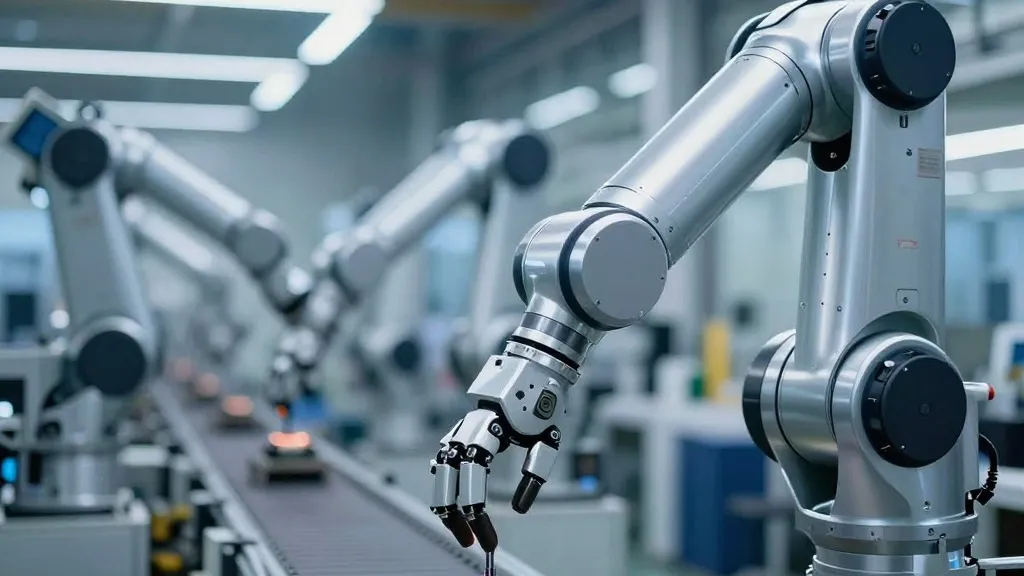
The most significant technical challenge identified is the robot’s hand. A Tesla engineer noted that the hand is one of the most difficult hardware components to perfect, alongside custom gears that have reliability concerns. Musk agreed, explaining that fingers must be soft enough to handle delicate objects yet durable enough to withstand constant wear. Unlike human skin, robotic parts cannot heal, making long-term reliability a critical focus.
On the software side, Tesla is still refining its AI architecture. Because the company does not have a large fleet of robots collecting data in the wild, similar to how its cars collect data for Full Self-Driving, Tesla plans to build 10,000 to 20,000 units for an internal practice ground called the Optimus Academy. The company also plans to integrate its AI5 chip into the robots around April 2027. Musk promised a video within the next two months showing the robot performing unscripted tasks, arguing that many current demos rely on pre-programmed routines.
This timeline follows a pattern of delays. In 2024, Musk predicted internal use in 2025 and high-volume external production in 2026. By January 2025, he expected 10,000 robots to be built, with several thousand doing useful work by year’s end, a target he later admitted was not met. Tesla’s recent shareholder letter describes the current units leaving the Fremont line as the first "production-quality" bots manufactured, implying that earlier models did not meet that standard.
Musk claimed on the call that no other company is "even close" to Tesla in developing a general-purpose humanoid robot. However, competitors are making notable strides. XPeng, an electric vehicle maker, activated an automated production line for its IRON robot in Guangzhou in September. The company targets mass production by the end of 2026 and deliveries in the first half of 2027, a schedule comparable to Tesla’s.
Meanwhile, Boston Dynamics, a subsidiary of Hyundai, began producing its electric Atlas robot in January. All of its 2026 deployments are already committed, including to Google DeepMind. The company opened a training center in Georgia in September where Atlas is learning to sequence car parts. Hyundai plans to deploy 25,000 robots across its plants in the coming years. Boston Dynamics also hired Milan Kovac, Tesla’s former head of Optimus, in January. While Tesla focuses on dexterous hands, Boston Dynamics has prioritized sturdy grippers for industrial use, offering a different approach to the same mechanical challenges.
The delay highlights the broader industry struggle to create robots that are reliable and capable of generalizing to new tasks. While Tesla may lead in the number of units built, the focus is now on making those units useful in real-world scenarios. The next few months will be crucial, as the promised video of unscripted robot work will serve as a key test of whether the new late-2027 timeline is realistic.
Source: Electrek